
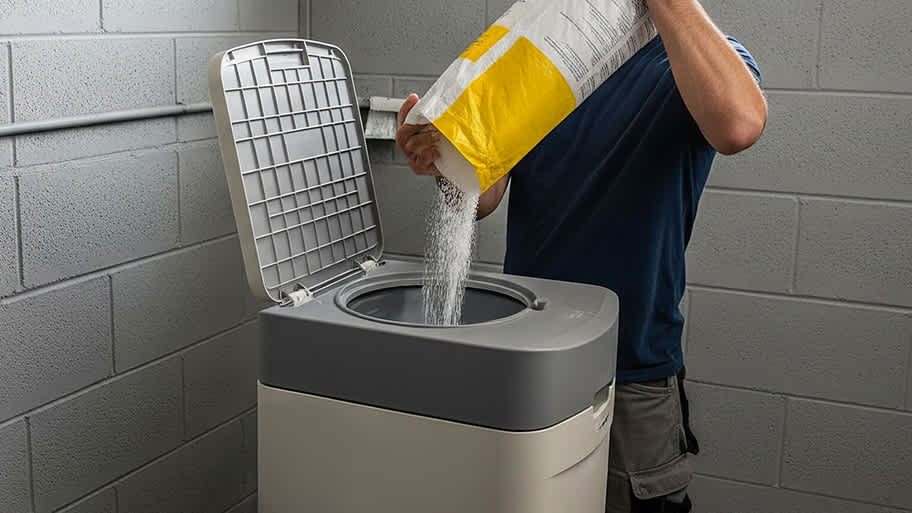
How much a water softener costs depends on your home’s size, and the system’s type and capacity. Our expert guide explores all the price factors.
Finding the right fit is the secret to softer water

Common water softener sizes range from 24,000 to 80,000 grain capacity, with 32,000 grains fitting most households of three to four people.
Your water softener size depends on your water hardness level in grains per gallon and your household's daily water consumption in gallons.
Water hardness level and household size are the top factors that determine the grain capacity you need for effective water softening at home.
Hiring a local water softener installation professional takes the guesswork out of sizing calculations and ensures your system matches your home's specific needs perfectly.
Knowing how to size a water softener is essential if you’re hoping to enjoy all of the benefits of soft water, including better-tasting tap water, spotless silverware and dishes, and smoother skin. However, picking a size isn’t as simple as going online and comparing 32,000 grain versus 48,000 grain versus 64,000 grain water softeners. Instead, you’ll need to consider your home’s water hardness and average water usage, then run the numbers to find the right water softener size for your needs. Here’s how.
There’s no single standard water softener size, but there is a range of common sizes. That’s because the right size for each home depends on the number of people in the household and the level of water hardness, which is measured in grains per gallon (GPG).
Water softener size is listed in terms of grain capacity (GR), with the most common sizes including:
16,000
24,000
32,000
40,000
48,000
64,000
80,000
96,000
Your water’s hardness level is one of the primary factors to consider when picking a water softener size. It reflects how many grains of dissolved minerals (notably calcium and magnesium) are in your home’s water.
We’ll explain how to find your water hardness in the next section, but for now, here’s how hardness levels impact water softener sizes for households of one to four people:
| Water Hardness in GPG | Water Softener Capacity in GR |
|---|---|
| 5–10 | 32,000 |
| 11–20 | 32,000–40,000 |
| 21–30 | 32,000–48,000 |
| 31–40 | 48,000–64,000 |
| 41–50 | 64,000–80,000 |
| 50+ | 64,000+ |
Similarly, here’s how water hardness impacts water softener sizes for larger households of five to eight people:
| Water Hardness in GPG | Water Softener Capacity in GR |
|---|---|
| 5–10 | 40,000–48,000 |
| 11–20 | 48,000–64,000 |
| 21–30 | 64,000–80,000 |
| 31–40 | 64,000–96,000 |
| 41–50 | 96,000–110,000 |
| 50+ | 96,000+ |
Calculating the right size water softener for your home isn’t too difficult, but it does involve gathering some information and crunching a few numbers.
Start by figuring out how hard your water is. If you live in a city, you may be able to contact your municipality or search online to find this information. However, if you look online, be sure to use a reliable and up-to-date source. Otherwise, you can buy a home test kit if you can’t track down any accurate data or prefer to measure your water hardness yourself.
The industry standard measurement for water hardness is GPG. However, municipalities often provide this data in milligrams of dissolved calcium per liter of water (mg/L) or parts per million (ppm). To convert mg/L to GPG, divide by 17.1.
If there’s iron present in your water, you’ll need to increase your hardness level by 3 GPG for every 1.0 ppm or mg/L of iron.
According to the U.S. Geological Survey (USGS), there are four tiers of water hardness:
| Description | Hardness Level in mg/L | Hardness Level in GPG |
|---|---|---|
| Soft | 0–60 | 0–3.5 |
| Moderately hard | 61–120 | 3.5–7 |
| Hard | 121–180 | 7–10.5 |
| Very hard | 180+ | 10.5+ |
Next, compare your water hardness level with your daily water consumption. For the most accurate picture, you’ll need all of your water bills from the past year since consumption often varies throughout the year.
Each bill should list your household’s per-gallon consumption for that month, which you can use to calculate your average monthly usage over the last 12 months. Once you have that figure, divide it by 30.5 to get your daily average.
Average water consumption per month (in gallons) / 30.5 = daily average water usage
If you can’t find every water bill from the previous year, use the most recent one to estimate your daily usage. Or, if you don’t have any water usage data at all, you can multiply the number of people in your household by 90 gallons (the average daily consumption for individuals in the U.S.).
Now, you’ll need to figure out your household’s daily softening requirements—or the number of grains your water softener needs to remove each day.
To do this, multiply the hardness number by your daily water usage. Let’s say your water hardness is 10 GPG, and your family of four uses an average of 320 gallons of water per day. In that case, your daily softening requirement would be 3,200-GR (10 GPG times 320 gallons).
Water hardness in GPG x daily average water usage = GR needed for your water softener
Manufacturers list water softener sizes in GR. This is the number of grains that the water softener can remove before it regenerates (or flushes out the minerals collected from your hard water). For example, if you compare a 48,000- versus 64,000-grain water softener, the latter model can remove 16,000 more grains than the former before it requires regeneration. Look for a water softener that can handle a week’s worth of your household’s water consumption before regenerating.
In theory, this should be simple: Using our previous example, if your household has a daily softening requirement of 3,200 GR, that’s a weekly softening requirement of 22,400 GR—meaning that a 24,000-GR water softener would be suitable. In reality, though, grain capacity numbers aren’t always precise. To adjust for real-world conditions, aim for a capacity that’s 30% higher than your weekly softening requirement.
In other words, if you calculated a weekly softening requirement of 22,400 GR, you’d really need an additional 6,720 GR, so you should opt for a water softener with a capacity of at least 30,000 GR. (Realistically, you’d buy one with a 32,000-GR capacity, the most common size for a household of three to four people.)
For a more accurate idea of a water softener’s true capacity, you can also look at its resin quantity in addition to its grain capacity:
| Peak Grain Capacity (in GR) | Resin Quantity (in Cubic Feet) |
|---|---|
| 24,000 | 0.75 |
| 32,000 | 1.0 |
| 48,000 | 1.5 |
| 64,000 | 2.0 |

There’s a lot to consider when sizing a water softener, including how hard your water is and how many people live in your house. Here’s a quick rundown of the most important factors.
As we’ve covered, the hardness of your water affects the size of your water softener. The harder your water, the more mineral grains it has and the bigger your water softener needs to be.
Larger households need larger water softeners. Why? When the number of people in a house increases, so does water consumption. And when you use more water, your water softener has to remove more grains from the water.
High-efficiency water softeners have precision controls that you can configure to have the system regenerate before reaching its maximum capacity. Doing so will cut down on how much salt you need to run the water softener, saving you money and excessive trips to the store to buy water softener salt.
As an example, assume that you have a 30,000-GR weekly softening requirement. Let’s say you have a 32,000-GR water softener with 1.0 cubic feet of resin, which requires 18 pounds of salt to regenerate after 32,000 grains. If you set it up to regenerate after 20,000 grains, it might only use 6 pounds of salt because the resin beads aren’t as exhausted.
So, how does this impact water softener sizes? Even if you only have a 30,000-GR weekly softening requirement, you might size up to a 48,000-GR water softener with 1.5 cubic feet of resin to reduce your salt refill costs even more. Be careful, though. You don’t want to buy a model that’s too big for your needs.
Whether it’s too big or too small, a wrong-sized water softener can cause problems. If it’s too large for your needs, it might result in “channeling,” which is when there’s not enough water to fill the softener unit. This can force hard water to create a “groove” and repeatedly travel through the same resin beads, leading to oversaturation and less effective water softening.
On the other hand, an undersized water softener won’t be able to produce enough soft water, leaving you stuck with hard water problems. It might also decrease your water pressure, need additional servicing, or require faster replacement.
If you don't have prior experience installing or repairing a water softener, consider contacting a plumber for assistance.

If you have questions about sizing, reach out to a local water softener installation company. They can explain the differences between water softener sizes and recommend the best one for your home.
As usual with ECO, tech Jordan was outstanding, very professional, very knowledgeable, and very thorough with repairs made to tankless water heaters. Very highly recommend ECO!!!
 Eco Plumbers, Electricians, and HVAC Technicians
Did a great job replacing the ice maker and water regulator on my refrigerator. He was quick and thorough, very friendly and professional. If I needed a heart transplant I'd want him to do it!!!
We had a gutter blockage that was causing water to sheet down the side of the house and ultimately it started to come in at a window (need mortar people next). Called around 7:30am, and he responded by 8am. He was able to come out the same morning and do a look over and clean out. He also...
Scott checked our large crawl space for mold and water infiltration and recommended a viable solution. The crew was efficient and they cleaned up well after the job. The job was expensive but I am confident that I won't have to deal with the problem again. Highly recommend.
 AdvantaClean of Dublin
They were the most through inspecting the water system in my house. Even going the extra mile to get the water professionally tested for contamination.
 Hague Water Conditioning, Inc.
It went very well. The drain is absorbing all the access water. I had other estimates a year earlier and Hughes was right on. I will use them, again.
 Hughes Construction Co
Very well. Have already used them again to fix hot water heater
 Service Olympians
The Paul Davis team was very professional and went the extra mile to take care of my water damage. The work was very high quality and done in a timely manner. I would highly recommend their services.
 Paul Davis Restoration
Honesty is hard to find in business today. GBR met me today at a 3 story building regarding my being told that I needed to tuckpoint the brick because of water leaks. The owners took the time to evaluate the situation and advised me that I did not need their service at all. They pointed me...
 GBR Masonry Inc
They unclogged the drain and sent me a bill for more than 4 times what I paid before. I called the Water Works to ask why the bill was so high and that they should have gotten my authorization before assuming they could make expensive decisions like that on my behalf and for their benefit....
 The Waterworks
From average costs to expert advice, get all the answers you need to get your job done.
How much a water softener costs depends on your home’s size, and the system’s type and capacity. Our expert guide explores all the price factors.
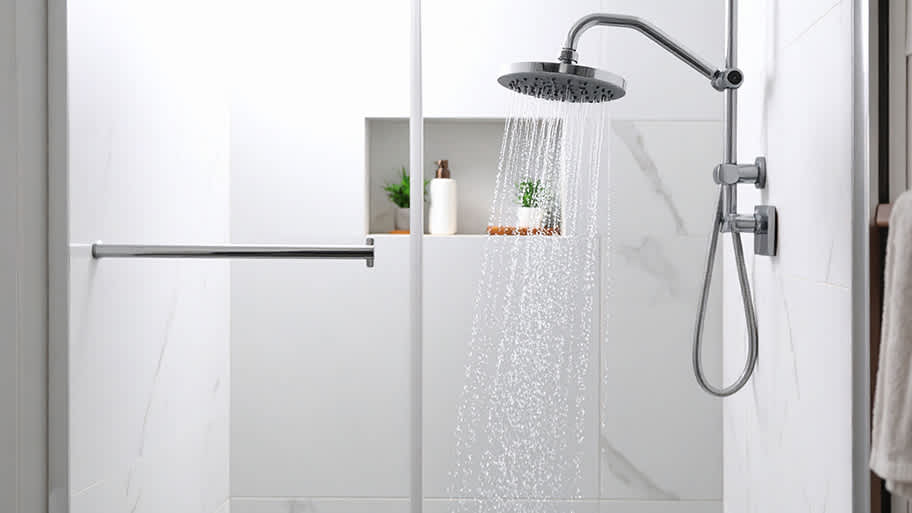
Water softener repair costs can add up, but they’re almost always worthwhile. Use this guide to see what your project is going to cost before you get started.
There are four common softener alternatives available on the market today. We compare and contrast each one to help you find your best-fit solution in this blog.
Trying to decide between the different types of water softeners? Our guide will help you choose the right salt-based or salt-free option for your home.
Need help dialing in your water hardness? Use this handy DIY guide on how to set a water softener to save money and get the best results possible.
Water softeners last up to 25 years, but maintenance, usage, and other factors can affect the life span. Learn more about how long water softeners last.