


Thinking of adding a plunge pool to your backyard? Find out how much plunge pools cost, from materials to labor to add-on features.
Pool construction and installation costs depend on your project and location. Check with a local pro for your specific job.

Infinity pool installation costs $65,000 to $150,000, and your total depends on pool size and materials you choose.
Your pool material is the largest factor impacting your price, with fiberglass and vinyl costing less than concrete or tile.
You should budget for permits at $450 to $1,800 and plan site clearing, excavation, and grading before installation starts.
Hiring a local pool service professional ensures your infinity pool is built safely, meets code, and lasts for years.
In 2026, the national average cost to install an infinity pool is $95,000, with most homeowners spending between $65,000 and $150,000 depending on pool size, materials, and site conditions. Customizations and premium finishes can push costs toward $130 per square foot, so it pays to plan your design carefully before breaking ground.
| Pool Size | Cost Range (All-In) | Average Cost (All-In) in 2026 |
|---|---|---|
| 10 x 20 ft. (200 sq. ft.) | $11,000–$26,000 | $18,500 |
| 12 x 24 ft. (288 sq. ft) | $16,000–$37,000 | $26,500 |
| 14 x 28 ft. (392 sq. ft.) | $22,000–$51,000 | $36,500 |
| 15 x 30 ft. (450 sq. ft.) | $25,000–$58,000 | $41,500 |
| 16 x 32 ft. (512 sq. ft.) | $28,000–$67,000 | $47,500 |
| 18 x 36 ft. (648 sq. ft.) | $36,000–$84,000 | $60,000 |
| 20 x 40 ft. (800 sq. ft.) | $44,0000–$130,000 | $87,000 |
Material is the single biggest cost driver for an infinity pool, with prices ranging from $20,000 to $60,000 for budget-friendly vinyl up to $75,000 to $150,000 for premium tile. The right choice depends on your aesthetic goals, how much maintenance you're willing to take on, and your overall budget, as costs vary significantly by material type. Explore infinity pool material costs in the table below:
| Material | Price Range | Description |
|---|---|---|
| Fiberglass | $25,000–$50,000 | Budget-friendly, easy to clean, low long-term maintenance |
| Vinyl | $20,000–$60,000 | Affordable with a smooth surface but requires liner replacement at 10 years |
| Concrete | $65,000–$120,000 | Highly customizable and durable but higher cost and longer build time |
| Tile | $75,000–$150,000 | High-end luxury finish with custom designs, though costly and slow to install |
Fiberglass: The cost of a fiberglass pool is typically between $25,000 and $50,000, which includes a basic pool deck. This is one of the most popular styles of infinity pool because it’s budget-friendly and easy-to-clean. That said, the maintenance will cost around $5,000 to $10,000 over the course of a decade.
Vinyl Liner: Vinyl liner infinity pool prices range from $20,000 to $60,000. These are relatively budget-friendly and easy to maintain. It also provides a smooth, non-abrasive surface for swimmers. Unfortunately, it’s not the most durable. Vinyl liners can rip and tear. On average, you’ll have to replace your liner every 10 years
Concrete: Concrete, shotcrete, or gunite pools cost an average of $65,000 to $120,000. This type of pool is on the high end, but it offers a wide range of customizations and greater durability. It’s one of the most versatile choices, but patience is a virtue. It can take months to build a concrete pool because the concrete needs time to cure. It also requires increased maintenance to stave off mold and algae growth.
Tile: A tile infinity pool costs anywhere from $75,000 to $150,000, depending on size and the type of tile. This is one of the most popular materials for luxury infinity pools. Tile allows for complete customization. You can choose different colors, patterns, and decorative designs. It’s also durable, but it can take a long time to install, which raises costs.
Labor typically accounts for 25% to 50% of the total project price, which translates to roughly $20 to $40 per square foot, with an average of $30 per square foot for labor alone.
Beyond the base installation price, infinity pool projects typically involve land preparation, permits, safety features like fencing, and ongoing maintenance costs that all add to your total budget. Planning for these extras up front helps you avoid surprises and keeps your long-term ownership costs manageable.
Land preparation covers site clearing, excavation, and grading, with clearing alone running $1.50 to $2 per square foot and additional charges for removing large trees or established shrubs. Pool excavation costs between $8 and $25 per cubic yard, and your total will depend on pool size, as the breakdown below illustrates.
| Pool Size (Feet) | Pool Size (Cubic Yards) | Average Excavation Costs in 2026 |
|---|---|---|
| 10 x 12 | 27 | $200–$275 |
| 12 x 12 | 32 | $250–$800 |
| 12 x 24 | 64 | $500–$1,600 |
| 14 x 28 | 87 | $700–$2,000 |
| 16 x 32 | 114 | $900–$2,850 |
| 20 x 40 | 178 | $1,400–$4,450 |
Permits for infinity pool construction typically cost between $450 and $1,800, and the specific permits required, along with their fees, vary by location, so check with your local authority and the pool contractor you hire before budgeting.
Adding an infinity pool will likely increase your homeowner's insurance premium due to the elevated risk of pool-related injury. Speak with your insurer before finalizing your project plans so you can factor any premium increase into your overall budget.
Ongoing maintenance is a real cost of infinity pool ownership, covering regular expenses like chemicals at $400 per year, electricity at $1,200 per year, and heating and cooling at $1,800 per year, alongside occasional costs such as pump replacement at $475 per replacement and motor replacement at $110 per replacement.
Pool cleaning runs about $500 per year whether you hire a local pool maintenance service or budget for your own supplies and equipment. You can also expect periodic pool repair costs on top of routine upkeep, so reviewing common pool maintenance costs in detail will help you build a realistic household budget.
Add-ons tackled during pool installation, from decorative tile accents and diving boards ($300 to$5,000) to decking, landscaping, and lighting ($150 to$1,000 per light), all increase your total project cost, and costs vary widely by feature type. Explore common infinity pool add-ons and their costs below.
| Infinity Pool Add-Ons | Average Cost in 2026 |
|---|---|
| Seamless viewing wall | $16,500 |
| Tile | $2,000–$70,000 |
| Pool deck | $3,000–$12,000 |
| Pool fencing | $1,500–$10,000 |
| Diving board | $300–$5,000 |
| Waterfall | $1,500–$30,000 |
| Lighting | $150–$1,000 per light |
| Pool cover | $800–$2,500 |
| Landscaping | $1,100–$9,000 |
Seamless viewing wall: A seamless viewing wall costs $16,500 for about 15 square feet of glass or acrylic. The cost per square foot is higher than other pool materials.
Tile: Tiling a pool with an infinity edge costs anywhere from $2,000 to $70,000, depending on the type of tile and the size of the area. Some homeowners tile a small decorative accent, like a waterline, while others tile the whole pool. You could spend as little as $1 to $35 per square foot on porcelain or ceramic or up to $100 per square foot for luxury ceramic and glass tile.
Pool deck: Building a deck for your pool costs between $3,000 and $12,000. The price of the deck depends on the materials you choose and can cost as little as $3 per square foot for simple pressure-treated wood, to $40 per square foot for luxury stone options.
Pool fencing: When you build an inground pool, fencing is an important safety feature—and some local jurisdictions even require it. Most homeowners spend $1,500 to $10,000 on the average cost to install a pool fence or $15 to $25 per linear foot.
Diving board: If your pool is deep enough (at least 9 feet according to the American Red Cross), then you can add a diving board at a cost of $300 to $5,000.
Water slide: Adding a water slide costs between $1,000 and $14,000.
Waterfall: Installing a waterfall or an elaborate water feature costs anywhere from $1,500 to $30,000. While not essential, a waterfall adds another layer of beauty, charm, and luxury to your pool setup.
Lighting: Lighting can add some ambiance and increase safety, allowing you to use your pool at night. Expect to spend $150 to $300 for each standard pool light, but you could spend as much as $1,000 on each hard-wired LED light. Floating pool lights, which are a temporary option, cost $20 to $100 each.
Pool cover: Generally, homeowners spend between $800 and $2,500 on a standard safety cover, but there are different types of pool covers that span every budget. A simple solar pool cover will cost between $30 and $150, while an automatic cover will cost anywhere from $3,000 to $12,500.
Landscaping: Many homeowners work landscaping into their pool design—whether it’s some grass or more elaborate mulching and shrubbery. You can expect to spend $4.50 to $12 per square foot on landscaping, but hardscaping (like adding a patio, pergola, or firepit area) will cost $5 to $25 per square foot. You could spend anywhere from $1,100 for some sod to $9,000 for a larger retaining wall.
Working with a pro on this task is a must. Ensuring the safe, durable installation of your new pool is vital for both the pool itself and the surrounding property, which is why the only way to complete this task is to hire a local in-ground pool company for help. These experts bring years of experience as well as a huge range of tools to the job, which means they’re well worth the investment despite making up 25% to 50% of the total project cost.
There are many benefits to working with an expert on your pool installation, such as:
Building a durable, safe pool that will last for years
Ensuring compliance with building code
Help with grading and leveling the land to prepare for the pool
Access to services to finish the pool off, such as a pool deck and other landscaping jobs
Access to work warranties on your new pool
Improved home value thanks to professional pool installation
You can’t install the entire in-ground pool yourself, but you can speed up the process by completing some prep work on your own:
Clearing the area of debris, plants, trees, and other obstacles
Coordinating with excavation professionals, if needed
Coordinating with electrical, plumbing, and HVAC pros, if needed
Create a clear path for vehicles and machinery to access the site of the pool

There’s no way around it—infinity pools are not an inexpensive project. It’s a big spend with a big reward. You get to wake up every day with a little slice of vacation right in your backyard. That said, there are still some ways you can save money while installing an infinity pool
It’s not just about width. It’s about depth, too. The smaller the pool, the less you’re going to pay. Instead of choosing a full-sized pool with a dive-ready deep end, opt for a small plunge pool. The average plunge pool costs $20,000, which is $60,000 less than the average infinity pool. It’s still just as refreshing (unless, of course, you want to swim laps).
The longer a pool takes to install, the more it’s going to cost. Certain materials like tile and concrete have long installations, which can dramatically impact your budget. Instead, reach for affordable materials like fiberglass or vinyl.
Your swimming pool installation professional can help you find the material that works best with your budget, climate, and lifestyle.
Extras like water features, diving boards, slides, and fancy lighting can all increase costs. Instead, stick with the necessities. If you live in a warm climate, you may even want to consider skipping out on pool heating—let the sun do its job. This won’t just save you up front; it will lower long-term operating costs.
Since pool decks can cost anywhere from $3,000 to $12,000, you can save thousands by opting for plain concrete. If you want luxury stone tiles, intricate pavers, or custom wood, you can always upgrade later.
A pool can add value to your home but it depends on the specific market. A pool’s return on investment (ROI) ranges anywhere from 5% to 56%—but most homeowners spend a significant amount more building their pool than they receive back when they sell.
To understand the value, you should look at comparable properties in your area. How much do homes with pools cost compared to the homes without? If most of the homes in your neighborhood have a pool, adding a pool could make your listing more competitive.
Consult carefully with your pro regarding the size and depth of your pool
Ask what your pro recommends for the pool material, as this is a major cost factor
Make sure your pro evaluates the land where you’ll be digging, as some types of earth are more expensive to excavate
Consider working with your pro on add-ons like your pool deck or pool cover if they offer those services
Home is the most important place on earth, which is why Angi has helped more than 150 million homeowners transform their houses into homes they adore. To help homeowners with their next project, Angi provides readers with the most accurate cost data and upholds strict editorial standards. We extensively research project costs to develop the pricing data you see, so you can make the best decisions for you and your home. We rely on reputable sources, including the U.S. Bureau of Labor Statistics, academic journals, market studies, and interviews with industry experts—all to ensure our prices reflect real-world projects.
Want to help us improve our cost data? Send us a recent project quote to [email protected]. Quotes and personal information will not be shared publicly.
If you’re good people wanting to do business with good people, hire Matt. He is a consummate professional and utterly competent. He installed a water heater in my home at a price that beat competitors by hundreds of dollars with a promise to support the unit for its life (even after its 6 yr...
 Greene's Plumbing Services
Joseph did a great job with the staircase and trim. Timely and efficient, clear communication about the work, very fair pricing. For the stairs in particular, done very skillfully in an old house (1893) in a tight spiral, and very creative with how to do the handrail. Did a nice job with...
 Vouis Trim Carpentry L.L.C.
This company does it right. Firstly, I want to say that Landan was a joy to work with. He was so kind, transparent, and had everything under control. His entire team showed up ready to work and they were all very respectful of the fact that we were in an office space. A little backstory – we...
 Krumlauf Floors
Professional Team, smooth to communication chain and schedule flexibility. Follows proper construction procedure and completes task on time.
 Pegasus Concrete
Very professional, knowledgeable and helpful! Completed the install on time and as expected.
 Ward's Services
Cole has been handling plumbing and general contracting for our four properties over the past three years, and he’s always done a great job. Most recently, he installed a sink and countertop in our retail store where none existed before, and it turned out exactly how we needed. He’s...
 ANB Renovations LLC
Excellent, Prompt, Courteous Service!!! They were super friendly and quite personable. I felt very comfortable with the gentlemen that did the installation. They installed it exactly where I asked them to and they did an excellent job!! I loved their service so much.
 Tether House
I hired windows depot USA of central to install new windows in house in Oshawa. Ilya was very professional from the start, not only did he offered a great price, he also made sure the installation was on time. I am very satisfied with final outcome. The windows look great and the overall...
 Window Depot USA of Central Ohio
The guys did an outstanding job and we had a great experience with CarifaTile. I appreciated that Joe reviewed the quotes with me and set expectations prior to the install. The crews showed up as scheduled and always left the areas clean upon leaving the house. We will definitely use...
 CarifaTile
Did an amazing job transforming my yard. Also installed sod in places, would recommend to everyone.
 Cardinal Landscaping & Construction LLC
From average costs to expert advice, get all the answers you need to get your job done.
Thinking of adding a plunge pool to your backyard? Find out how much plunge pools cost, from materials to labor to add-on features.
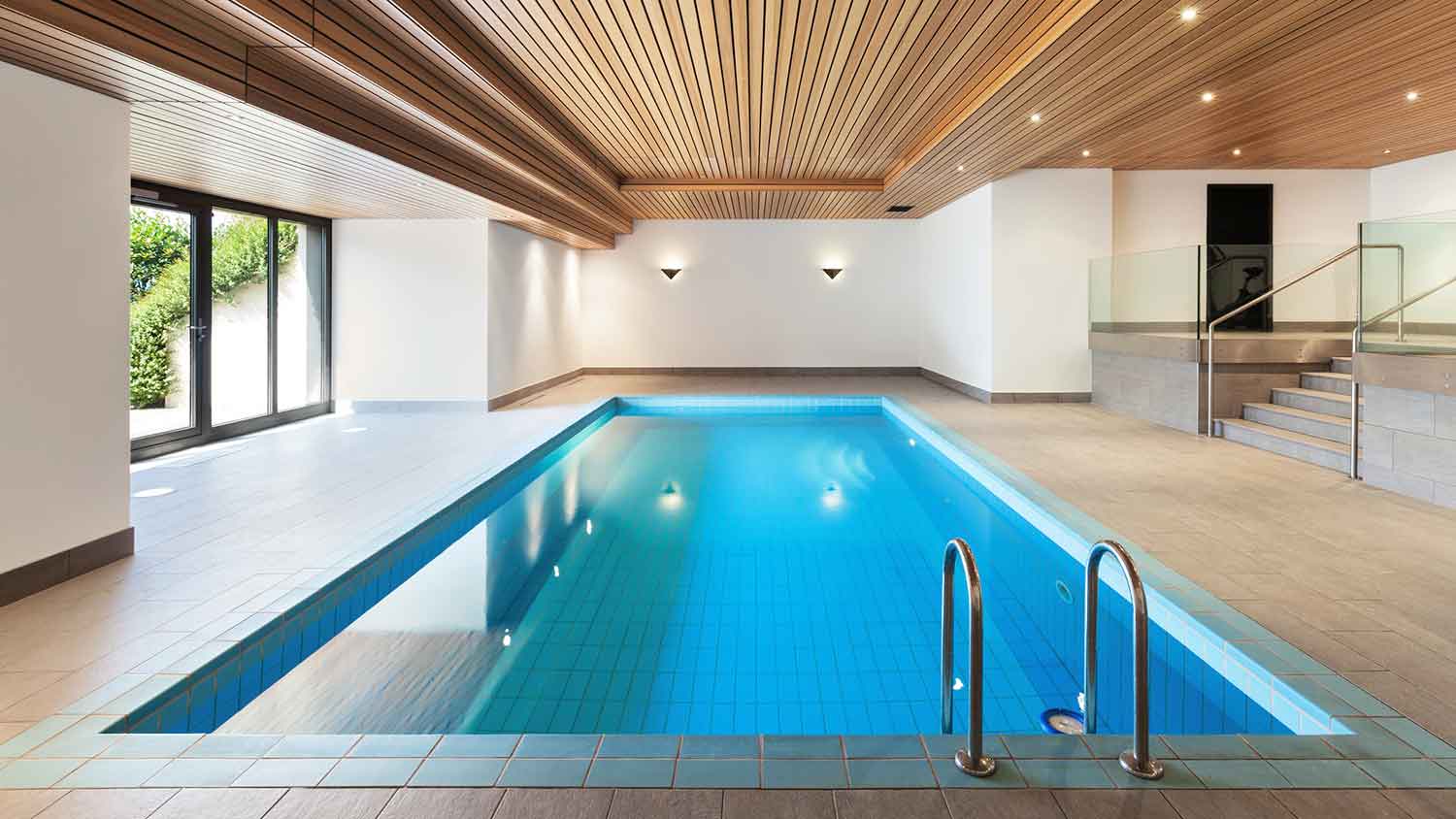
Many factors affect indoor pool costs. From different types and shapes to installation and maintenance, here’s what to consider when pricing out your project.
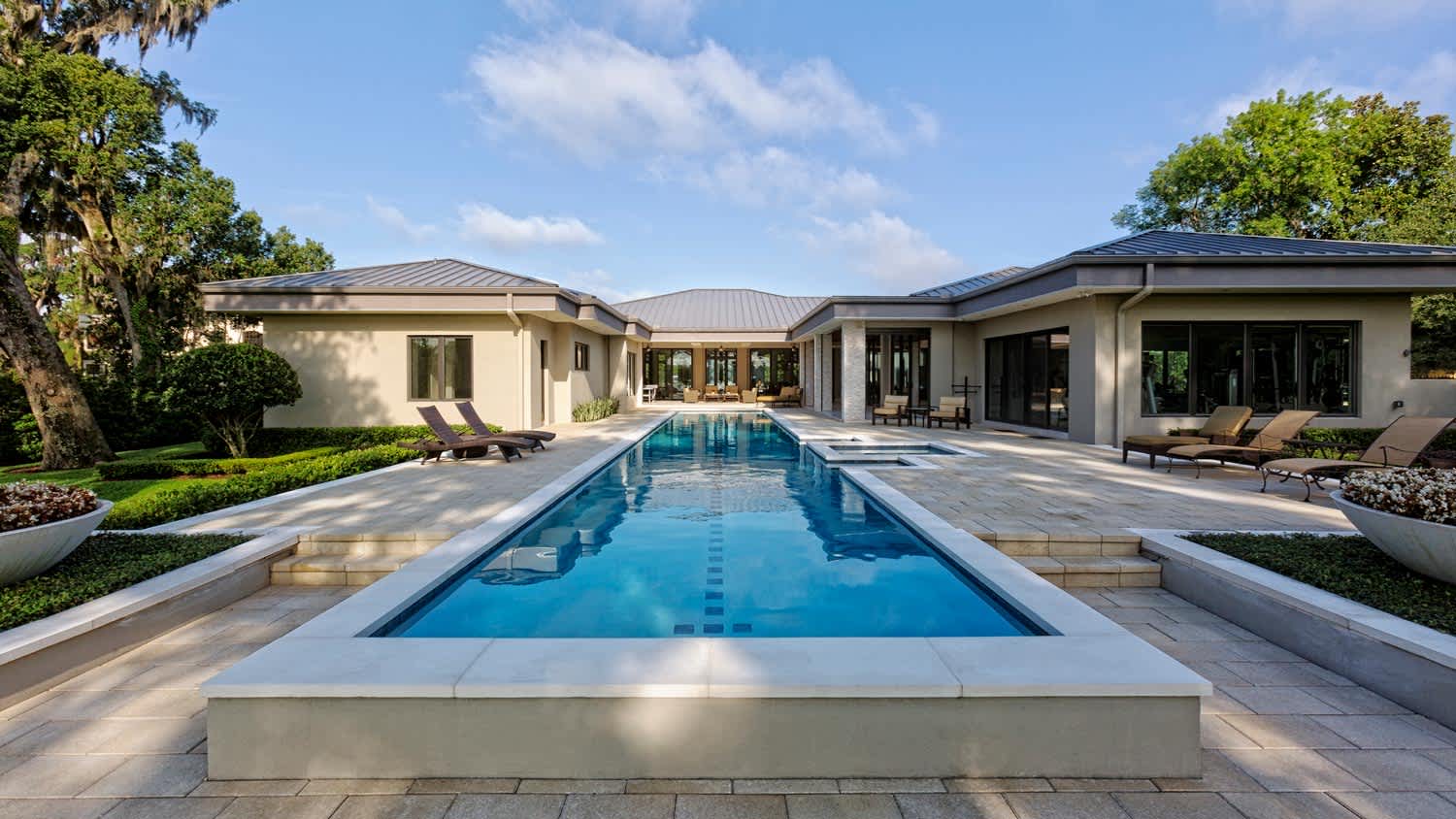
Lap pools are a great option if you're more interested in exercising than hanging out on a floatie. Learn all about lap pool costs in this guide.

What is an infinity pool, and how is it different from a standard pool? Our guide breaks down everything you need to know about this luxury item for your yard.

If you’re looking to get your backyard summer-ready, use this guide to learn pool opening costs, budget appropriately, and how to save money.
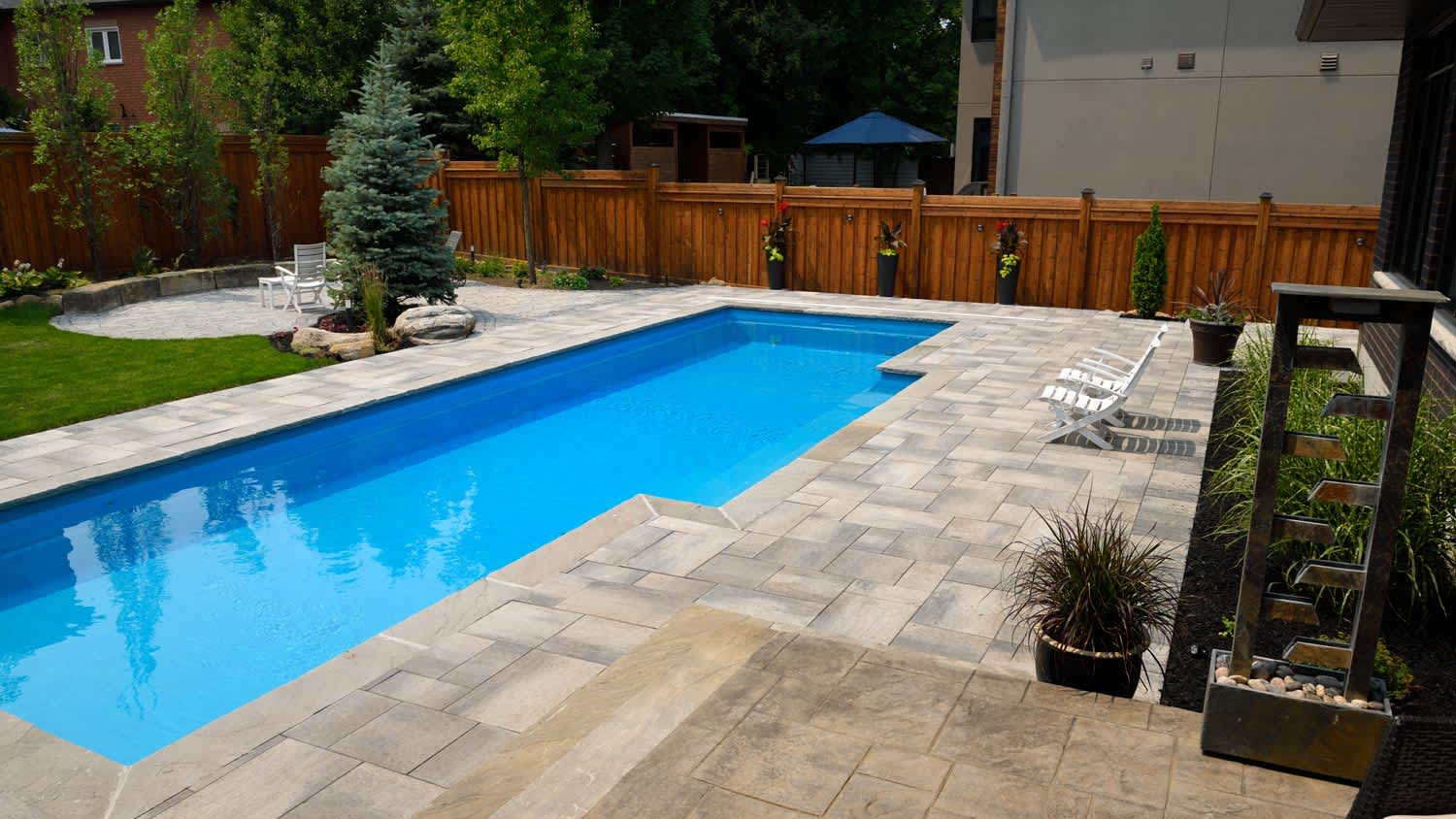
Fiberglass pools are a solid choice. If you are looking into installing one at home, read this guide to learn all the ins and outs of fiberglass pool costs.