


How much does a palm tree cost? The answer depends on the type of tree, its size, and other factors. Find out how much a new palm tree costs.
Kill the weed, not the tree


DIYing poison ivy removal on a tree puts you at risk of developing an uncomfortable rash.
During the removal process, everything you wear should either be washable or disposable.
Herbicides are effective at killing poison ivy but can also kill beneficial plants.
Improper disposal of the poison ivy can lead to regrowth, but a tree maintenance pro will make sure it’s done properly.
Poison ivy loves trees. Trees and fences create excellent environments for this toxic plant to grow, climb, and thrive, so it’s essential to know how to kill poison ivy on a tree. Additionally, hiding in a tree is a great way to go undetected for a long time. By the time you discover it, it may be a mature plant that's difficult to kill. However, finding poison ivy growing on a tree in your yard won't mean you'll have to kill the tree. Let’s review the steps you can take to remove only the poison ivy instead.
While a small handful of people may not develop a reaction after touching poison ivy, the vast majority will. Oil in the plant, leaves, stem, and roots causes intense itching, blisters, and rashes that can last for weeks. The oil is present in every part of the plant and is ready to rub off on anything that touches it or its parts. It can also become airborne if someone burns a poison ivy plant.
Preparing to kill poison ivy starts with covering all exposed skin and wearing heavy-duty rubberized gloves. Everything you wear should be washable or disposable, as the oil can remain potent and dangerous for months or even years after touching the plant. Before doing any work to kill or remove the plant, have a disposal plan, such as burial or proper removal from the property.
However you choose to kill poison ivy, safely disposing of it is a must. You can bury the plant elsewhere on your property with the understanding that it may sprout up in that location. Or you can place the plant debris into thick garbage or lawn bags and dispose of them according to your local yard waste disposal rules. Never burn poison ivy for any reason. The oil in the plant can become airborne and enter human and animal lungs.
Many of us know the saying, "Leaves of three, let it be." Although we may have learned it during childhood, it's still solid advice. Poison ivy comes in several varieties, and the poison ivy in one place may look very different from poison ivy in another. And, it's easy to mistake poison ivy for less volatile plants until it's too late.
Regardless of the shape of the leaves, the first identifier is that three parts of one compound leaf are always present on the ends of the branches. One leaf part in the center is on a longer stem, and two similar ones are on either side. The stem on the side leaflets is much smaller or almost non-existent.
Older poison ivy plants will likely have a hairy texture on the branches and may look like a vine or a bush. Blooming plants generate unique greenish-white berries that are a good sign of it being poison ivy. Older, climbing poison ivy plants may display woody, bare root-like structures well above the ground with numerous small rootlets coming off the side.
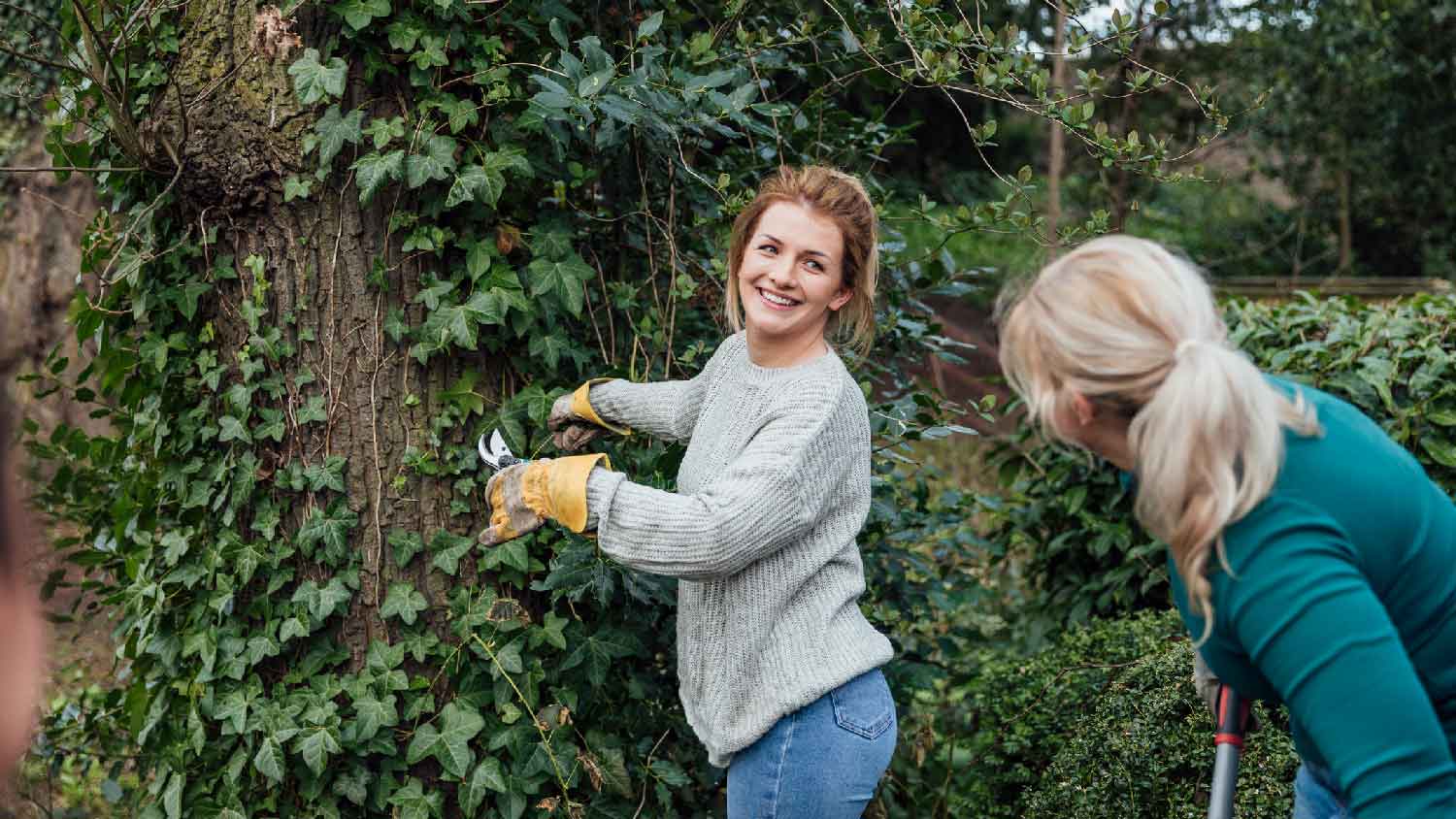
There are several ways to kill poison ivy on a tree without damaging the host. Part of the trick to success is patience. Poison ivy is a persistent plant that doesn't like to die. You may have to apply the following techniques more than once to eradicate the plant completely.
Manually killing poison ivy is best for smaller specimens growing around the tree trunk. For more mature plants, this option may not be enough. Start by lopping off the primary poison ivy plant stems a few inches above the ground and remove them from the area to protect yourself. Leave enough of the stems so you can identify them. Next, dig up the roots as much as possible with a spade shovel. Stake a black plastic sheet on the ground over the entire area and let it sit there for several weeks to kill any shoots that try to emerge.
Herbicides containing glyphosate are highly effective at killing poison ivy. The trouble is that it can also kill other, more desirable plants. There are three ways to use herbicide to kill poison ivy without harming other plants or the tree. Whichever you choose, protect your skin from exposure to the chemical and the plant, and protect other plants from the chemical with plastic or cloth.
Use a light, directed herbicide spray to coat the poison ivy leaves. It will take several days to see results, and several applications may be necessary to eradicate the plant. Avoid getting the chemical on the tree leaves, branches, or trunk.
Cut the primary stems several inches above the ground and coat them with the chemical. The plant will wither and die up in the tree, and the herbicide will kill the roots.
Cut several notches about halfway through thick poison ivy stems and coat the exposed woody stem with herbicide. Wait several days for results and apply again as necessary.
There are a few ways to kill poison ivy naturally with homemade remedies. One way is to douse the base and roots of the plant with boiling water. Simply pour it evenly over the root area and repeat the process for several days in a row.
Another natural way is to mix two cups of distilled vinegar and a cup of salt into a gallon of water. Use this natural herbicide as you would with a chemical herbicide, but repeat the application daily for several days until you begin to see results.
Killing all of the poison ivy may not be the goal of every homeowner, especially for those with properties bordered by natural areas. Several bird species rely on the plant for food. If the poison ivy on your property isn't creating a problem for you or the host tree, you might consider leaving it alone.
To control poison ivy rather than destroy it, use one of the natural remedies to kill off the parts that need eradication and leave the rest untouched.

Besides being a plant that can cause intense physical irritation, it can cause frustration and irritation when trying to get rid of it, too. Use these tips to help ensure poison ivy-killing success.
Thoroughly wash everything that may have come into contact with any part of the plant after performing eradication tasks. Take a “better safe than sorry” approach when cleaning up.
When dealing with poison ivy, adhere to your local restrictions and regulations regarding lawn waste disposal.
Have patience. Poison ivy is persistent and stubborn. Several attempts at removing it may be necessary before you can claim victory.
After removing the plant, keep a close eye on the area for signs of new sprouts and eliminate them immediately.
Eradicating poison ivy as a DIY project can be a frustrating task, but one you can do yourself if you're careful and patient. However, the job can also be dangerous. Touching any part of the plant can cause painful irritations that can last for a long time. Most homeowners opt to hire a local tree maintenance specialist or landscaping company to eliminate the plant from their yards rather than deal with the misery of the job and potential skin reactions. Removing poison ivy costs $300 to $850, depending on the size of the area being treated.
Larry and team did a great job removing a large tree and trimming a few others. Great customer service and reasonably priced.
 Diaz Tree Services
Excellent job by Service Tree Care. Trees were removed quickly and efficiently without any issues. The crew had safety equipment and insurance. Price was competitive too. Would definitely hire again!
 Service Tree Care Inc
It was great! The crew arrived with John and another foreman right on time. They made quick work of this very large tree and were extremely respectful of our property and the structures near the tree. They even saved a little squirrel that had lived in the tree... not exactly actually their...
 Hes Company LLC
Performed above work in 2 day period. Original were going to use another tree service recommended by neighbor but did research on Angies list and saw Evergreen. Neighbor and myself got estimates of $1000 cheaper than other estimates. Would highly recommend and will definitely use in future. I...
 Evergreen Tree Service
Trenton and the rest of the team at Arbor Artists are totally professional, competent, and responsible. I have used them on multiple occasions and would never use anyone else. You might be able to save a few bucks by getting...
 Arbor Artist Inc
Got off to a bit of a rocky start as Fidel was supposed to come and give an estimate yesterday and never showed. However my husband spoke with him early this morning and he had guys here by noon to remove a tree in the backyard of our town home with a slanting yard, and remove and...
 ADM Tree Service & Landscaping LLC
From average costs to expert advice, get all the answers you need to get your job done.
How much does a palm tree cost? The answer depends on the type of tree, its size, and other factors. Find out how much a new palm tree costs.

How much does it cost to rent a chainsaw? Whether it’s for cleaning up your yard or cutting firewood, learn what options are available and what you’ll pay.

Discover the average tree maintenance cost, key price factors, and tips to save. Get expert insights to plan your tree care budget with confidence.
Trees are fantastic marvels of nature, but they can also be large and cumbersome. Can you get the city to trim or remove a tree for free? Keep reading to find out.

Arborists define Dutch elm disease as one of the most destructive diseases a tree can catch. Here’s what you can do—from spotting symptoms to treatment.

Wondering who to call when a tree falls in the road? The answer varies for public and private roads—find out more with this guide.