


Learn about the different factors that go into water heater gas valve replacement costs to see if you should DIY the project or call a pro.
What’s happening to my hot water?

Hot water heater trouble signs include insufficient hot water, leaking tanks, unusual noises, inconsistent temperatures, low pressure, discolored water, and foul odors.
Expect to pay $90 to $1,730 for water heater repairs or $880 to $1,800 for replacement, so addressing issues early helps you avoid higher costs.
A failing water heater can cause water damage to floors and belongings, electrical hazards from faulty components, or overheating that leads to scalding and burns.
Hiring a local water heater repair professional provides reliable help with sediment buildup diagnosis, leak detection, and mechanical repairs to keep your home safe.
Nothing kills the mood more than freezing water in the middle of a steaming shower. Plus, the harm of a failing water heater goes beyond inconvenience. Therefore, you should always look for the signs of a water heater failure to stay proactive. As with all appliances, the sooner you address abnormalities, the better.
Recognizing early warning signs is important, but figuring out the right fix isn't always simple. Delaying professional help or attempting complex DIY repairs can lead to further damage and increased costs. With our network of local pros, you can hire a skilled professional to assess the issue and recommend the best solution.
While water heaters often feel like background appliances, they are one of the major pieces keeping your home running. If your water heater fails, it can lead to real dangers beyond the discomfort of not having hot water on demand.
The main threats of a failing water heater include:
Water damage: A failing water heater may begin to leak or even burst, causing severe water damage to the floors below, surrounding areas, and personal items. If left unaddressed, the water damage may lead to mold growth or significant structural damage.
Electrical hazards: Gas and electrical water heaters both have electric components. Faulty parts, circuits, or connections to the main power supply can cause shock and bodily injuries.
Overheating: A malfunctioning thermostat may lead to overheated water that’s too hot to be safe for skin exposure. If overheated water pours out of a showerhead, you can end up in serious burns.
Thankfully, a failing water heater gives plenty of warning signs. If you know what you’re looking for, you can take action and either repair or replace your water heater in time.
The most obvious sign of water heater failure is a lack of hot water supply. If you can’t get enough hot water in the shower or while using the sink, your water heater might be going out. A tanked water heater usually stores enough hot water for several household members to take a full shower. Meanwhile, a tankless water heater should never run out of hot water.
If your water heater has a tank, it can collect sediment buildup over time. This slowly chips away the storage space available for hot water, reducing your water heater’s capacity. Sediment buildup can also result in clogged or corroded pipes, leading to more severe damage. Therefore, performing regular maintenance and flushing your tank annually is crucial.
If you have a tankless water heater, insufficient hot water usually suggests a mechanical or electrical issue that a licensed professional should address.
Look for pooling water under the water heater and check for surface moisture. These are both signs of potential leaks. Leaking water heaters can cause water damage to floors and even lead to mold growth, so they should be addressed as soon as possible.
Water heater leakage can come from multiple sources. Check all valves and connections to ensure they are properly connected and sealed. Next, check any pipes to ensure they’re not cracked and leaking. However, if you notice a leak in the water tank, it’s best to have a professional handle it.
Your water heater should never make any unusual noises beyond normal vibration from it turning on and off. If you hear banging, gurgling, or clanging noises, something is definitely not right. Loud noises from the water heater deserve your immediate attention. Based on the sound, you might be able to guess what’s wrong. However, it’s the safest to have a professional to check it out. If possible, refrain from running hot water until the problem is diagnosed and repaired.
If you get splashes of lukewarm or cold water during a hot water run, something might be wrong with your water heater’s heating element, such as the fuse. Sometimes the thermostat might malfunction, stopping your water heater from heating the water to the desired temperature. To replace a faulty unit, expect to spend $50 and $250. However, you might need a pro to help identify the exact problem.
Decreased water pressure is another sign of failing water heaters. This can be caused by a leaking or faulty pressure valve, a leaking tank, issues with the connecting pipes, or sediment buildup. Annually flushing your water heater will prevent buildup from affecting the water pressure. However, if the problem is caused by a failing temperature and pressure relief (TPR) valve, bring a licensed pro to repair the issue immediately. A faulty TPR valve can cause your water heater to explode.
If you only notice discolored or rusty water when running hot water, something could be wrong with your water heater. Mineral deposits, corrosion, or other sediment buildups can cause this issue. Some of these deposits may irritate your skin, while others can clog the hot water lines, leading to bigger plumbing problems.
A foul or metallic odor, like sulfur or rotten eggs, coming from your hot water is a red flag. This smell could be caused by bacteria buildup inside the tank, especially if the heater hasn’t been flushed in a while. The smell may also point to an anode rod problem.
A sudden spike in your utility bills could be linked to an inefficient water heater. As appliances age, they lose efficiency, especially if there’s a sediment buildup at the bottom of the tank. This layer of sediment forces the unit to work harder and longer to heat the same amount of water, using more energy in the process.
If your plumber is coming out multiple times a year to fix your water heater, the unit may be on its way out. Occasional maintenance is necessary, but repeated issues suggest the system is wearing out. Continuing to invest in repairs will eventually outweigh the cost of a new, more efficient water heater.
Generally speaking, it’s best to have a licensed water heater repair professional work on your water heater. It is a complicated appliance that requires electrical and plumbing knowledge most homeowners do not have. Plus, working with hot water can be dangerous for the inexperienced.
Generally, you should not attempt DIY water heater repairs if you think the appliance is failing. If the problem with your water heater is caused by a loose connection, you can easily tighten things up yourself. Otherwise, anything mechanical, electrical, and plumbing-related should be handled by a licensed and insured professional.
All appliances age and fail, but there are ways to prevent common water heater problems and extend their lifespan. Here are a few ways to prevent your water heater from going out:
If something sounds unusual, have your water heater inspected.
Get your water heater flushed at least once a year or every six months if you have high water usage.
Check the anode rod for rust or corrosion and replace it if it's damaged.
Periodically Inspect for leaks around the bottom of the tank.
Check the TPR valve to keep it in proper working order.
Keep the water heater at 120 degrees, but feel free to adjust the water temperature based on the season.
Set your water heater to vacation mode whenever you're away.
Only hire professional water heater experts to install your unit.
A water heater repair contractor usually charges by the hour, plus the cost of parts. On average, water heater repair costs range between $90 and $1,730. However, your final cost might be higher if you need plumbing and water damage restoration services. Therefore, it’s always best to have someone inspect your water heater as soon as you notice one of the above signs of water heater failure.
The average cost to replace a water heater is $880 to $1,800, though a new traditional tanked water heater could up to $3,000. Traditional water heaters last 6 to 15 years. A new tankless water heater costs $2,615 on average but can last 15 to 20 years. A third option is hybrid water heaters, also known as heat pump water heaters. These are the most expensive options and can cost $6,000 to $9,000 without installation.
As usual with ECO, tech Jordan was outstanding, very professional, very knowledgeable, and very thorough with repairs made to tankless water heaters. Very highly recommend ECO!!!
 Eco Plumbers, Electricians, and HVAC Technicians
Did a great job replacing the ice maker and water regulator on my refrigerator. He was quick and thorough, very friendly and professional. If I needed a heart transplant I'd want him to do it!!!
We had a gutter blockage that was causing water to sheet down the side of the house and ultimately it started to come in at a window (need mortar people next). Called around 7:30am, and he responded by 8am. He was able to come out the same morning and do a look over and clean out. He also...
Scott checked our large crawl space for mold and water infiltration and recommended a viable solution. The crew was efficient and they cleaned up well after the job. The job was expensive but I am confident that I won't have to deal with the problem again. Highly recommend.
 AdvantaClean of Dublin
They were the most through inspecting the water system in my house. Even going the extra mile to get the water professionally tested for contamination.
 Hague Water Conditioning, Inc.
Very well. Have already used them again to fix hot water heater
 Service Olympians
The Paul Davis team was very professional and went the extra mile to take care of my water damage. The work was very high quality and done in a timely manner. I would highly recommend their services.
 Paul Davis Restoration
Honesty is hard to find in business today. GBR met me today at a 3 story building regarding my being told that I needed to tuckpoint the brick because of water leaks. The owners took the time to evaluate the situation and advised me that I did not need their service at all. They pointed me...
 GBR Masonry Inc
They unclogged the drain and sent me a bill for more than 4 times what I paid before. I called the Water Works to ask why the bill was so high and that they should have gotten my authorization before assuming they could make expensive decisions like that on my behalf and for their benefit....
 The Waterworks
We had two outdoor fixtures swapped for motion sensing fixtures and a GFCI outlet added to the outside of the garage for the bird bath heater. <br /> He arrived at the agreed upon time and I was surprised and impressed at how quickly everything was completed. <br /> I would definitely...
 Powers Electric LLC
From average costs to expert advice, get all the answers you need to get your job done.
Learn about the different factors that go into water heater gas valve replacement costs to see if you should DIY the project or call a pro.
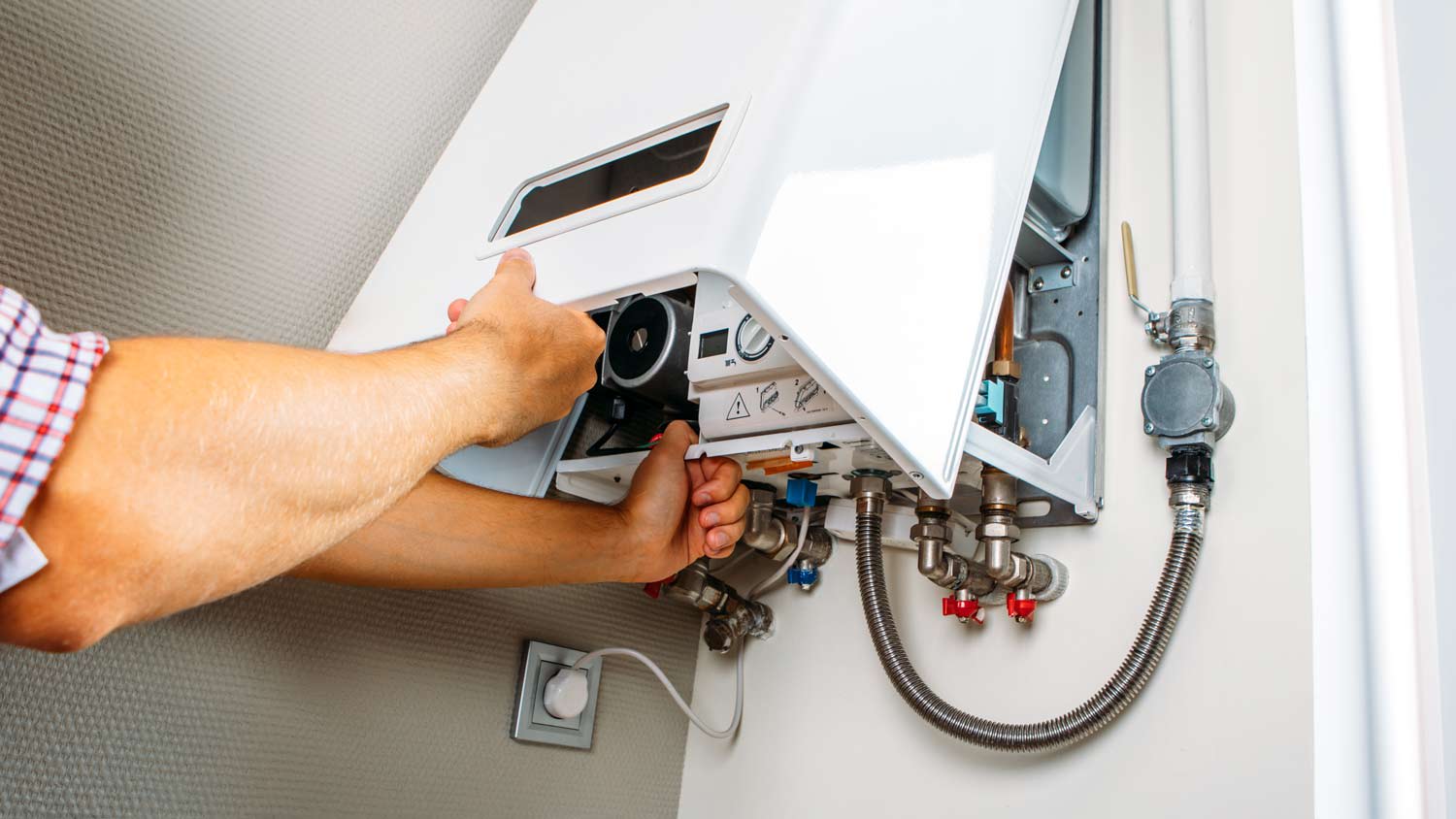
What are some signs you need a new water heater? Get a look at the common signs your water heater needs to be replaced because damage is beyond repair.

Is there water in your water heater pan? Why is my hot water heater leaking? We’ll review common causes for leaking water heaters—and what to do.
If your water heater is getting warm but not hot, a faulty thermostat, sediment, or more could be to blame. Learn how to spot and solve the problem of a water heater that’s not hot enough.

Is your water heater at risk of explosion? Read further to learn about the warning signs.
If your water heater is leaking, you can still use water as long as you have a repair plan. Here’s what you need to know about a leaking water heater.