
While both Type C vs Type X drywall are fire resistant—the two should not be used interchangeably. Use this guide to help you choose the drywall for your next project.
Drywall fire rating requirements vary by room and location

Sheetrock fire ratings determine how long your drywall resists fire, with standard drywall lasting up to one hour and Type C lasting up to four hours.
Expect to pay $15 per sheet for standard drywall, $21 per sheet for Type X, and $30 per sheet for Type C fire-rated options.
Your local building codes determine whether you need fire-rated drywall in specific areas like boiler rooms, garages with generators, or kitchens.
Hiring a local drywall professional ensures proper installation with taped joints and multiple layers when needed, improving your home's fire resistance and meeting safety codes.
If you’re building a home, considering house renovations, or just wondering if you’re properly protected in a worst-case scenario, you may be wondering if drywall is flammable. In short, all drywall is technically fire-resistant. However, not all drywall is created equal. In this guide, we’ll discuss drywall fire rating, which determines just how resistant your drywall will be to fire.
All drywall is fire-resistant to some degree, and the fire rating of your drywall is what determines how long the building material can be exposed to flames without catching fire. It’s important to note that even with the highest drywall fire rating, your walls are fire-resistant and not fire-proof. With enough exposure, all drywall will catch fire.
Standard drywall panels are made of a layer of a soft, non-flammable mineral called gypsum pressed between two thick sheets of paper. There is also water incorporated into the structure of the material, which effectively blocks the transfer of heat through the drywall.
When exposed to fire, drywall will not immediately ignite. The heat from the fire will begin to vaporize the water within, simultaneously charring the drywall and causing it to lose about half its strength and stiffness. When the water vapor has dissipated completely, the gypsum will begin to heat and the drywall may begin to burn.
Temperature does not affect the fire resistance of drywall. Instead, different types of drywall can resist burning for certain periods of time depending on their ability to maintain structural integrity. No drywall can stop the spread of fire completely, but knowing the differences between regular and fire-rated drywall can help you know which is best for your project.
| Drywall Type | Fire Resistance |
|---|---|
| Regular Drywall | Up to 1 hour |
| Type-X Drywall | Up to 2 hours |
| Type-C Drywall | Up to 4 hours |
The most commonly used type of drywall in home construction is regular drywall made of gypsum plaster. This variety serves as a base for interior paint application and comes in various thicknesses including ⅝ inch, ½ inch, ⅜ inch, ¼ inch, and ¾ inch panels. Half-inch panels, also called lightweight drywall, are the most common because they are easier to transport and handle.
Standard drywall, regardless of thickness, is able to resist burning for up to one hour.
| Pros | Cons |
|---|---|
| Cost-effective | Less fire resistant than Type C |
| Also resists mold and mildew | Difficult to install |
| Versatile |
Type X is one of two types of fire-rated drywall specifically manufactured with special additives to provide superior mold, mildew, and fire protection. Type X drywall is usually made from thin sheets that are ⅝ inches thick. The added thickness and moisture contained within the sheets help resist burning for up to two hours when applied in a single layer to both sides of standard wood framing in a house.
Type X drywall is around 30% more expensive than standard drywall, so the added fire protection you get for the increased drywall installation cost is worth it, depending on your situation.
| Pros | Cons |
|---|---|
| Offers the most fire resistance | Expensive |
| Easy to paint | Expensive |
| Meets strict building codes |
Type C drywall is also fire-rated and provides superior fire resistance compared to Type X. Depending on the project, Type C will resist burning for up to four hours. It also features a smooth surface that is very easy to paint.
Type C drywall is around 25% more expensive than Type X drywall, and about 100% more expensive than standard drywall. Once again, the added protection you get from fire—200% compared to Type X and 400% compared to standard drywall—might be well worth the investment.
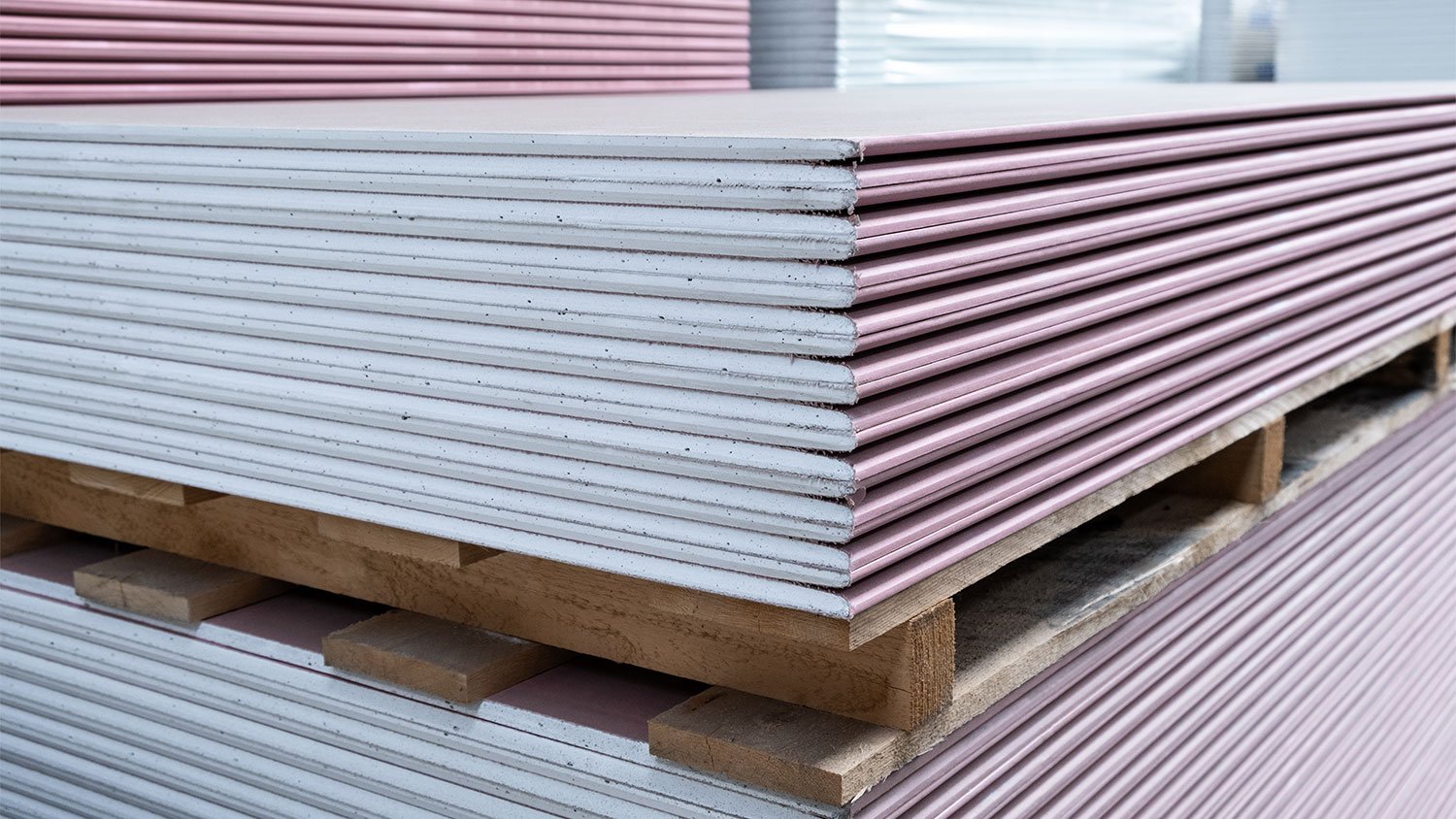
Fire-resistant drywall offers several benefits over regular drywall. Properly installed, it is more effective at containing a fire and slowing its spread, as well as protecting structural supports long enough for occupants to flee a burning building safely. From a safety perspective, fire-resistant drywall is a worthwhile investment, especially for larger apartment buildings or complexes that house many occupants.
With that being said, most residential homes aren’t required to include fire-resistant drywall. In some cases, local building codes or regulations might require Type X or Type C drywall, but this is usually in small areas particularly prone to fire. These include the following:
Boiler rooms
Garages, especially if solar batteries or generators are present
Kitchens
If you’re hiring a drywall installer near you to put up new drywall, they should know if fire-rated drywall is mandatory in certain parts of your home.
As you might expect, the higher the drywall fire rating you need or want in a room, the more expensive it will be to install new drywall. The table below includes a quick look at average prices for a single 4x8-foot sheet of drywall based on the fire rating.
| Type of Drywall | Average Cost Per Sheet | Average Cost Per Sq. Ft. |
|---|---|---|
| Standard Drywall | $15 | $0.46 |
| Type X Drywall | $21 | $0.65 |
| Type C Drywall | $30 | $0.93 |
Standard drywall resists fire for up to an hour and usually costs around $15 per sheet. If you opt instead for Type X drywall, you get 200% of the fire resistance, and your cost only goes up around 30%.
Type C provides 400% of the fire resistance of standard drywall and 200% of Type X. It costs around 30% more than Type X and 100% more than standard drywall. Each step up in drywall fire rating provides more bang for your buck, but it’s important to note that Type X and Type C drywall usually isn’t worth it unless it’s required by code, or you’re installing drywall in a commercial building or apartment building for safety reasons.
The way drywall is installed can also affect its fire resistance. Once the drywall is attached to a home's wood or steel studs, there are small gaps between sheets through which air, smoke, and fire could pass. Drywall contractors will apply tape and joint compound to close these gaps, thereby improving the wall's overall fire resistance.
A contractor can also install drywall in multiple layers to increase fire resistance. Additional sheets of drywall provide better protection for the studs and insulation behind the walls, increasing the time between a fire starting and the wall collapsing from damage.
Your local drywall contractors should know your local and state standards and fire codes regarding the application and finishing of drywall for the safest installation possible.
Cancelled appointment two hours after they were supposed to come for drywall work.
 Hutch And Sons Drywall Services
I would recommend this company to anyone! He showed up on time, was friendly, completed a very difficult repair on our dryer vent cover, was responsive, and pricing was extremely fair and competitive. I would have him back to do any of our repairs or cleanings without hesitation!
 U.S.A. Dryer Vent, LLC
I cant stop admiring my newly painted walls. Custom Paint Jobs LLC made my house feel brand new.
 Custom Paint Jobs, LLC
Excellent experience with hiring Tether House to Mount our 77’ Samsung TV in our bedroom. Fast, friendly, and knowledgeable. Highly recommend.
 Tether House
Excellent customer service and knowledge. I was recommend to him from my neighbour. My front door and window came in great and were installed beautifully perfectly, I m very satisfied with their excellent work, so decided to order one more big bow window for my living room. I cant wait for...
 Window Depot USA of Central Ohio
Manuel Calvillo is the best option in the area for roofing and you won't be disappointed.
Would hire again. Wall looks great. Happy with job.
 Central Paving
Involved an extensive bathroom remodel, including removing tub & installing walk in shower, new drywall, custome tile work to ceiling, plumbing, etc. Overall, job was done on time and on budget. Nick & his team were very professional and had high attention to detail. Quality was great. Highly...
 Stamos Flooring and Remodeling LLC
We have had a great experience with Rising Height for the past five years on a number of miscellaneous renovation projects. They laid flooring for us and had a very good sub do the finish. Installed drywall for a vaulted ceiling, finished an attic/loft with new subfloor, framing and drywall,...
 Rising Height Unlimited
Mr. Lopez was super nice and professional. He repaired our drywall just as he described during the estimate phase. Our dining room wall looks great again! Thanks Mr. Lopez!
From average costs to expert advice, get all the answers you need to get your job done.
While both Type C vs Type X drywall are fire resistant—the two should not be used interchangeably. Use this guide to help you choose the drywall for your next project.
The terms drywall and Sheetrock are often used interchangeably, but one is a brand and one is a specific product. Find out which one you need in this guide.
Every last detail of a home project must be considered for a quality finish, including drywall. Learn which types of drywall tape could be your best option.
Fireproofing can protect your home from a devastating fire. Learn how to build a fireproof house inside and out with this DIY guide.
Fire-resistant siding can protect you and your home in the event of a wildfire. Learn if stucco is fire-resistant and how it compares to other materials.

Drywall is one of the most important things to get right during home renovations. Use this guide to figure out what type of drywall is best for your project.